The Context
Jumia Food is the most convenient online food ordering site in Nigeria. The feature I scoped, OrderMore, addresses a specific user pain: the inability to order from multiple restaurants in a single delivery.
Today, users who want food from two restaurants pay two delivery fees, wait for two agents, and answer two security gates. OrderMore consolidates that into one cart, one delivery, and one experience.
Problem Statement
The user pain
Jumia Food users want the ability to order items from multiple restaurants within a single checkout and delivery flow. The current one restaurant per-order limitation increases delivery costs, creates unnecessary friction, and reduces convenience for users ordering from different vendors at the same time.
What customers actually needed
A flow that respects how people actually order food.
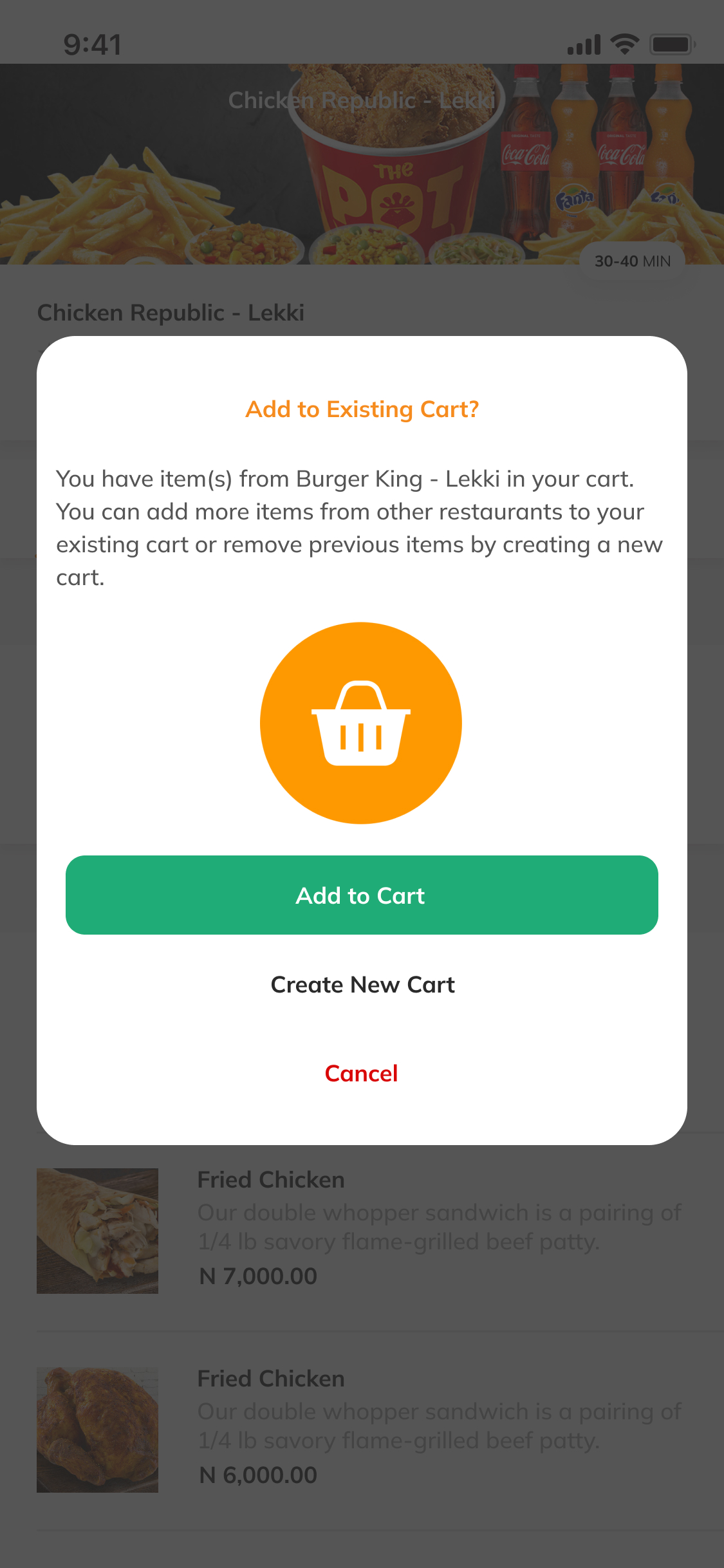
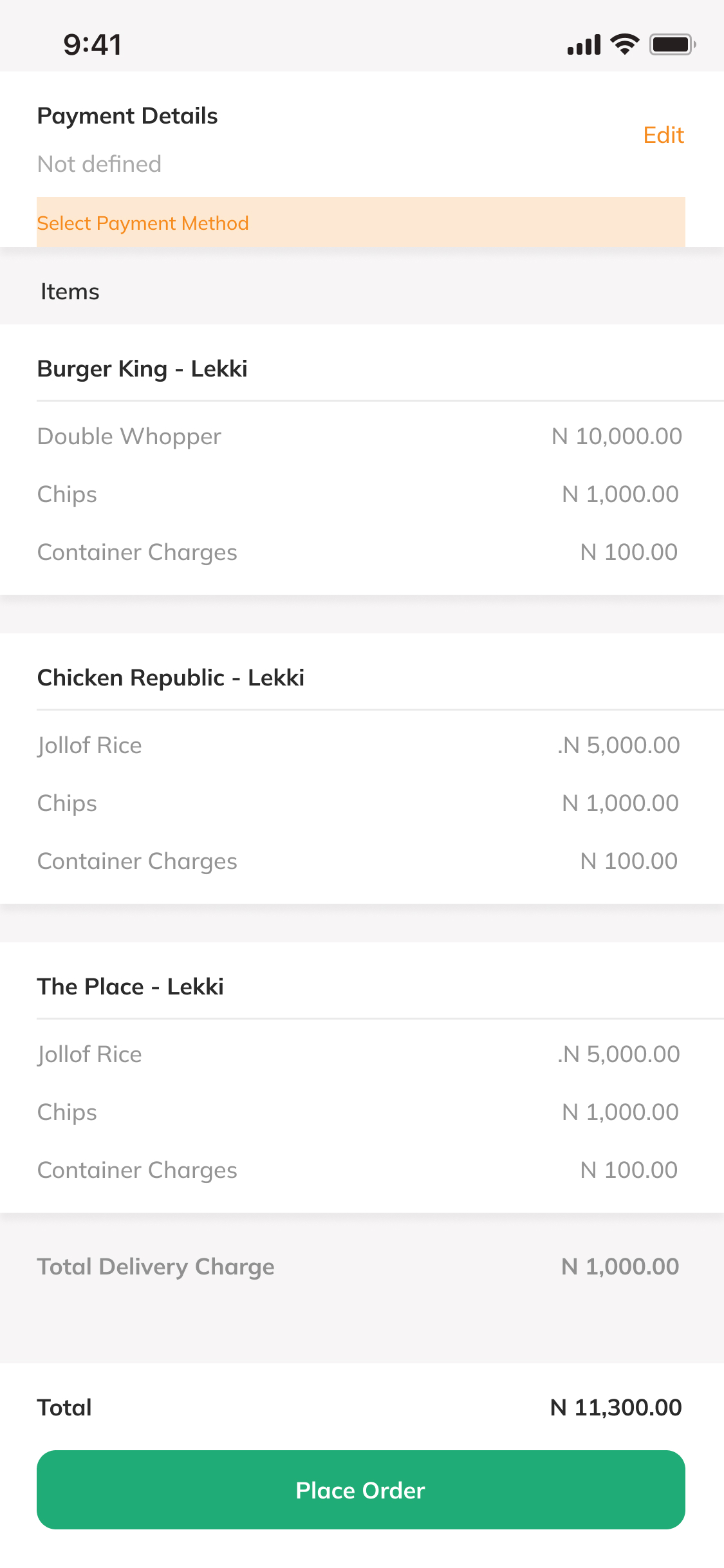
People rarely want one thing. They want sushi from one place, dessert from another, and the office order assembled across three restaurants their colleagues actually like. Forcing them into single restaurant orders is a category wide failure to listen to how food gets ordered in real life.
Personas
Fay doesn't skip meals and loves to snack between meals while she's at the office. She prefers options and not eating the same things over and over again. She hasn't used Jumia Food in over four months, she's frustrated with placing multiple separate orders, paying more on delivery, and the plating system.
Barakat eats twice daily and drinks a lot of coffee while working from home. He's too busy to cook so he orders daily. He likes Jumia Food because of the multiple restaurants, but gets tired of calling his estate gate to let multiple delivery agents in because Jumia won't deliver everything in one order.
Goals & Metrics
Three goals. Three measurement systems.
Enhance the ordering experience
Build a multi-restaurant cart that makes checkout feel seamless and matches how people actually order food.
Generate revenue through better service
Improve satisfaction by reducing delivery friction and making every order feel faster, clearer, and more reliable.
Reduce cancellations and failed orders
Keep restaurant inventory accurate and the delivery process smooth so orders complete successfully more often.
What Success Looks Like
The budget-conscious diner
"As an average income earner who hates cooking but is on a budget, I want to compare prices and deals from different restaurants close to me, and order my items all at once, so that I can save some money."
Acceptance: Users should be able to see different deal listings and compare prices.
The remote worker
"As a tech bro working from home who loves food, I want to order from my favourite restaurants and have it all delivered at once, so I can save time on ordering multiple times, eat a variety of meals I love, and avoid cooking after a long day."
Acceptance: Users should be able to make multiple food orders from all their favourite restaurants and have them delivered at once.
Go-to-Market
Reaching the right users through the right channels.
Target audience
- Primary audience: Gen Z and Millennial professionals (19–38)
- Secondary audience: Older working professionals (28–55)
- Core demographics: Tech-savvy individuals, students, and busy professionals who value convenience and flexible ordering experiences.
Distribution channels
- Social media: Paid campaigns and organic content across posts, stories, and short-form video.
- Restaurant partnerships: Flyers, banners, and in-store promotion across participating restaurant locations.
- Email campaigns: Re-engagement messaging, order reminders, and feature awareness campaigns.
- In-app promotion: Targeted in-app visibility for users within the rollout market.
What I Learned
The most valuable features are the ones that convert friction into reactivation
Fay had stopped using Jumia Food for four months. OrderMore wasn't simply a convenience feature, it directly addressed the reason she left. The most impactful product opportunities are often the ones that turn an existing "no" back into a "yes."
A PRD is a thinking framework before it becomes documentation
Writing the PRD forced clarity around what truly belonged in the MVP, what could wait, and what wasn't worth pursuing at all. The document itself mattered, but the structured thinking behind it mattered more.
GTM strategy should exist inside product thinking, not after it
Audience, positioning, and distribution channels shouldn't be treated as separate from the feature itself. If a product team cannot clearly explain how a feature reaches and resonates with users, the product strategy is still incomplete.